October 18, 2011

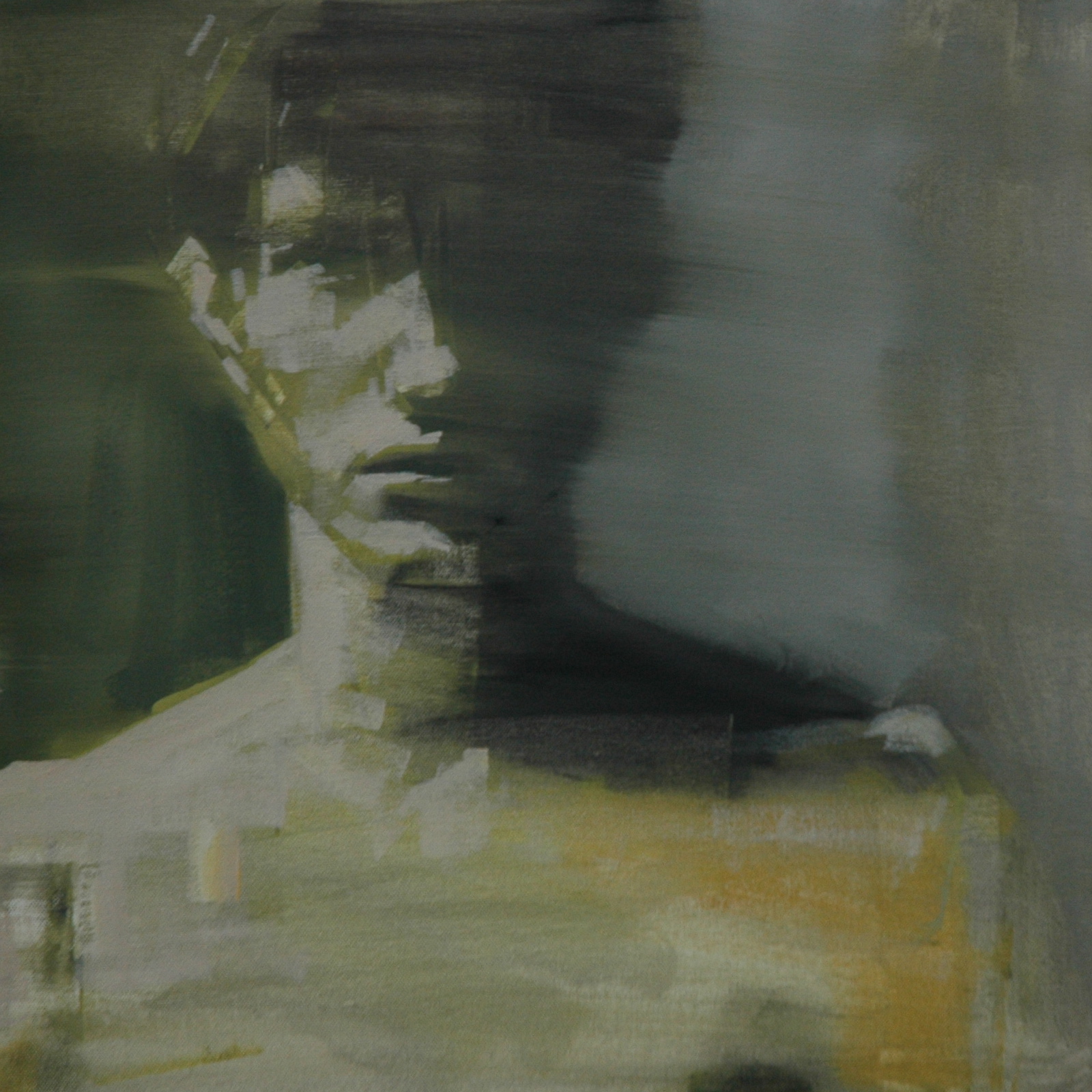
Narcissus redeemed

"Narcissus redeemed" oil on linen, 24" x 48" 2011


What would Narcissus look like if he were to stop staring at his own reflection? Most of us confirmed narcissists--among whom I count myself--might find our way out of the narcissistic trap by beginning to acknowledge the people around us.


Antonio Machado--the Spanish poet--suggest that narcissists might ask another person a question and then listen to the answer:
To talk with someone,
ask a question first,
then -- listen.


So here is Narcissus beginning to think about maybe acknowledging the one who walks beside him and perhaps ask him a question.

October 5, 2011

thank you Steve Jobs...


No one wants to die. Even people who want to go to heaven don't want to die to get there. And yet death is the destination we all share. No one has ever escaped it. And that is as it should be, because Death is very likely the single best invention of Life. It is Life's change agent. It clears out the old to make way for the new. Right now the new is you, but someday not too long from now, you will gradually become the old and be cleared away. Sorry to be so dramatic, but it is quite true.
Your time is limited, so don't waste it living someone else's life. Don't be trapped by dogma — which is living with the results of other people's thinking. Don't let the noise of others' opinions drown out your own inner voice. And most important, have the courage to follow your heart and intuition. They somehow already know what you truly want to become. Everything else is secondary.
When I was young, there was an amazing publication called The Whole Earth Catalog, which was one of the bibles of my generation. It was created by a fellow named Stewart Brand not far from here in Menlo Park, and he brought it to life with his poetic touch. This was in the late 1960's, before personal computers and desktop publishing, so it was all made with typewriters, scissors, and polaroid cameras. It was sort of like Google in paperback form, 35 years before Google came along: it was idealistic, and overflowing with neat tools and great notions.
Stewart and his team put out several issues of The Whole Earth Catalog, and then when it had run its course, they put out a final issue. It was the mid-1970s, and I was your age. On the back cover of their final issue was a photograph of an early morning country road, the kind you might find yourself hitchhiking on if you were so adventurous. Beneath it were the words: "Stay Hungry. Stay Foolish." It was their farewell message as they signed off. Stay Hungry. Stay Foolish. And I have always wished that for myself. And now, as you graduate to begin anew, I wish that for you.
Stay Hungry. Stay Foolish.
from Steve Job's commencement address at Stanford University

September 23, 2011

Looking Into A Face


This is the poem from which R. Bly took the title for his collection, "The Light Around the Body." It's called, "Looking Into A Face."

Conversation brings us so close! Opening
The surfs of the body,
Bringing fish up near the sun,
And stiffening the backbones of the sea!


I have wandered in a face, for hours,
Passing through dark fires.
I have risen to a body
Not yet born,
Existing like a light around the body,
Through which the body moves like a sliding moon.

light around the body


I've been using the title "light around the body" for a new series of paintings. I stole this title from a book by Robert Bly published in the early seventies. The book begins with a quotation from the German mystic Jacob Boehme:

O dear children, look in what a dungeon we are lying, in what lodging we are, for we have ben captured by the spirit of the outward world; it is our life, for it nourishes and brings us up, it rules in our marrow and bones, in our flesh and blood, it has made our flesh earthly, and now death has us.

I love this idea of the "flesh" being made "earthly" because it implies that the human body is capable of something more than that. It's as if "flesh" is not necessarily in opposition to "spirit;" as if only this "dungeon" view sees flesh as "earthly." (Interesting, isn't it, that this "dungeon" view is now regarded as the "religious" one?)


June 6, 2011

Alice 6.6.2011
Alice 9.18.2011

May 22, 2011

the bosque

I've been trying to paint some of what I see along the bosque trail near our house. The colors are much more subtle than the typical New Mexican landscape painting might suggest. Here are a couple of attempts...


Jung and the value of images

notes from my Sunday read:

C. G. Jung particularly was more open to aspects of world culture and its precedents, and his theory of archetypal images, as a kind of visual archeology of the mind, is a very powerful model with important implications for the practice of art.

[the money quote:]

Especially relevant is the notion, a basic component of ancient culture, that images have transformative powers within the individual self, that art can articulate a kind of healing or growth or completion process, in short that it is a branch of knowledge, epistemology in the deepest sense, and not just an aesthetic practice."

from "Reasons for Knocking at an Empty House," Bill Viola

growing wings


Gregory Palamas and the body

notes from my Sunday read:

"Again and again Gregory Palamas celebrates man (sic). Like many [eastern theologians] he believed the human body to be a divine image, a simulacrum of divinity. "The name of [humanity] is not given separately to the body and the soul,"  he wrote, "but to both together, for together, they have been created in the image of God."

"I suspect that Gregory Palamas and William Blake would have agreed on many things. Blake preached that the only way to the spirit was through the body, and regarded it with as much reverence as the soul because the body is part of the soul. "Man (sic) has no body apart from his soul," Blake wrote, "for that called body is part of the soul discerned by the five senses, the chief inlets of soul in this age." And again: "If the doors of perception were cleansed, everything would appear to man as it is, infinite."

from "The Holy Fire," Robert Payne

February 17, 2011

resisting the intelligence, almost

Wallace Stevens said, "poetry must resist the intelligence almost successfully." What does that mean? Maybe it means that a poem is more than a collection of images that can be translated into something we might call "the meaning of the poem."

I would like to say something like that about painting: that a painting must resist the intelligence--the urge to explain the image--and that it must do this "almost" (but maybe not completely) "successfully".

So a painting might allow for any number of "explanations." It might invite the intelligence in and then present it with many puzzles.

Followers